

How to Install & Set Fence Posts in Nanaimo: The Complete Coastal Guide for Vancouver Island Homeowners
Installing a fence in Nanaimo isn't the same as installing one in Kelowna or Calgary. The coastal climate, clay-heavy soils, and salt air create a unique set of challenges that generic online guides simply don't address. If you follow mainland advice, you could be looking at leaning posts, cracked concrete, and premature rot within just a few years.
This guide is built specifically for Nanaimo homeowners and contractors. It covers everything from local bylaws and frost depth requirements to the concrete-versus-gravel debate, with a focus on what actually works on Vancouver Island.
Why Fence Post Installation in Nanaimo Is Different
Before you dig a single hole, you need to understand what makes Nanaimo's environment so tough on fences. Three factors work together to shorten the lifespan of a poorly installed fence by roughly 40% compared to interior BC.
Salt Air Corrosion Accelerates Metal Failure
If you live within 500 metres of the ocean, salt crystals in the air absorb moisture and create a constantly wet surface on metal posts. This consumes galvanized coating two to three times faster than inland locations. Even beyond 1 kilometre, salt air still plays a role. Chain link and metal fence posts in Nanaimo commonly fail within 8–12 years, compared to 15–20 years in drier climates—and the primary reason is installation, not material defect.
Clay Soil Movement Causes Heaving
Much of the Nanaimo Lowland is underlain by clay-rich marine deposits and compact subsoils that expand when wet and contract when dry. This seasonal movement pushes posts upward—a process called heaving. Concrete footings crack, voids open around posts, and by spring your fence is out of alignment. The Nanaimo region's imperfectly drained Bowser soils and well-drained Beavertail soils both present challenges: the former holds moisture, while the latter can shift in shallow marine deposits over compact subsoil.
Coastal Wind Loads Demand Deeper Posts
Pacific winds create sustained forces that inland fences never face. A 30 km/h wind produces more than 50 pounds of force per linear metre of chain link fabric, and that force transfers directly to the post at the concrete interface. Shallow posts simply cannot handle that load over time.
Nanaimo Fence Bylaws and Permit Requirements
Understanding local regulations before you install saves you from costly compliance issues down the road.
Do You Need a Permit for a Fence in Nanaimo?
No building permit is required for a standard residential fence in Nanaimo. However, your fence must comply with the City of Nanaimo Zoning Bylaw 4500. Retaining walls are a different story: a building permit is generally required when a retaining wall exceeds 4 feet in height.
Maximum Fence Heights in Nanaimo Residential Zones
Fence height limits vary depending on your property's zoning and where the fence is located on your lot. For most residential zones (R1 through R10, and R13 to R15), the maximum heights are:
- Front yard: 1.2 metres (4 feet)
- Side and rear yard: 2.4 metres (approximately 7.9 feet)
- Flanking side yard (corner lots): 1.8 metres (approximately 6 feet)
Ornamentation and barbed wire count toward fence height. Retaining walls also fall under fence height regulations, and if you build a fence on top of a retaining wall, height is measured from the base of the wall.
Always verify your property lines and confirm your specific zoning before construction. The City of Nanaimo Planning Department can clarify any questions about your zone.
Frost Depth in Nanaimo: How Deep Should Fence Posts Go?
This is where generic advice fails Nanaimo homeowners most often.
BC Coastal Frost Line vs. Practical Post Depth
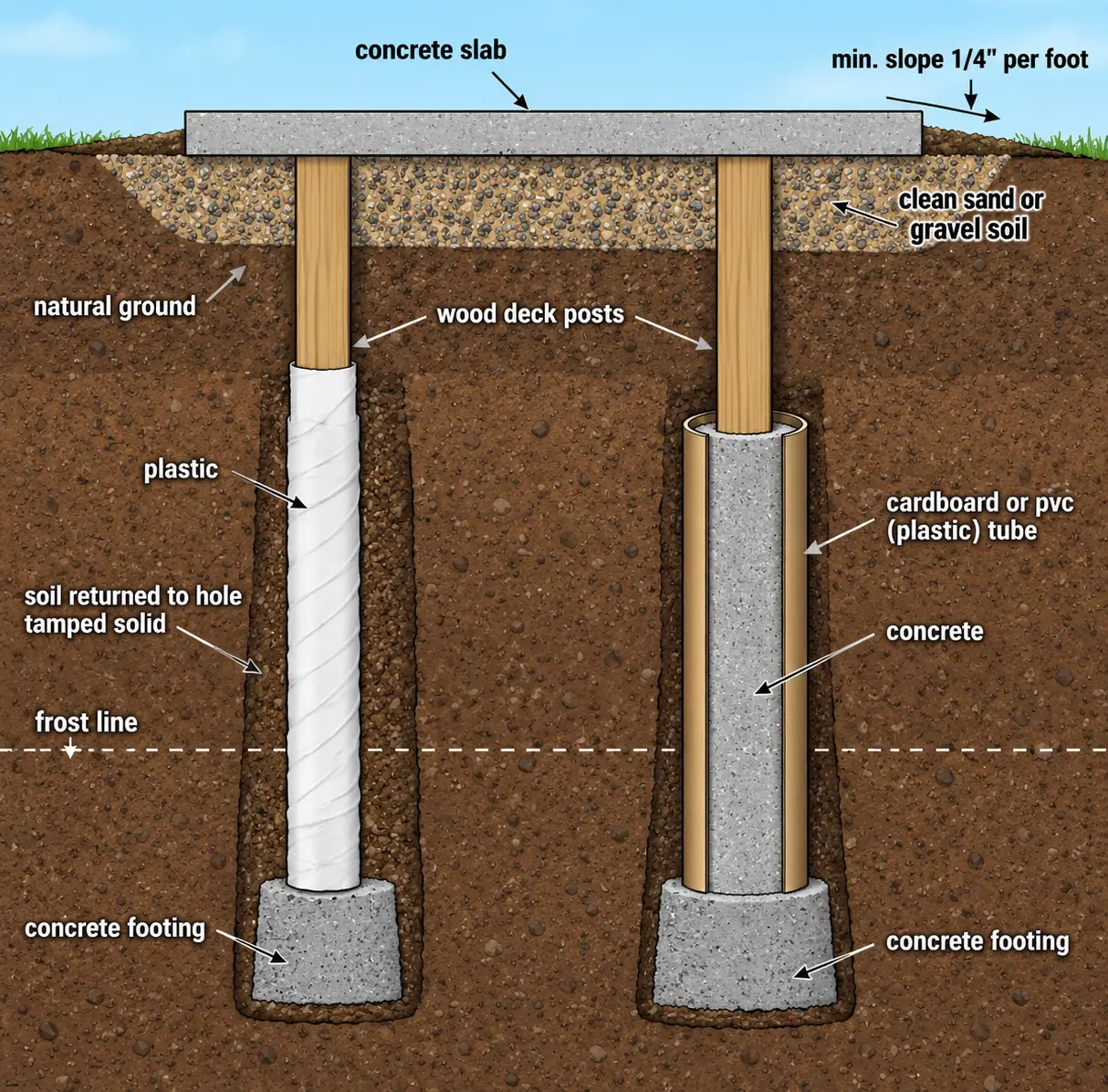
The theoretical frost line on the BC coast is relatively shallow—approximately 45 to 60 centimetres (18 to 24 inches). But here's the critical distinction: frost depth is not the same as stable post depth in Nanaimo's clay soils.
Clay soil expands and contracts well below the frost line. Posts set at 30 inches (76 cm) fail three times more often than posts set at 42 inches (107 cm) because the deeper posts reach stable subsoil below both the frost and clay expansion zones.
Recommended Post Depth for Nanaimo Fence Installation
For reliable performance in Nanaimo's coastal conditions, follow these guidelines:
- 1 Line posts: Set 36 to 42 inches (90–107 cm) deep
- 2 Corner posts and gate posts: Set 300 mm (12 inches) deeper than line posts, as corner and gate posts bear the greatest structural load
- 3 General rule: One-third of the total post length should be below ground, with a minimum of 24–36 inches regardless of frost depth
Dream Team Landscaping, a Vancouver Island fencing specialist, specifically recommends 36–42 inches for even line posts on Vancouver Island, not the 24–30 inches that mainland guides suggest. This deeper installation costs a bit more in labour and concrete but is the single most important factor in whether your fence lasts five years or twenty.
Concrete vs. Gravel: The Best Way to Set Fence Posts in Nanaimo
This is one of the most debated topics in fence installation, and the answer depends on your specific soil conditions and post material.
When Concrete Makes Sense
Concrete is the traditional choice and provides excellent initial rigidity. For corner posts, gate posts, and any post bearing a gate or heavy load, concrete is often the better option. The concrete mix should be crowned so it slopes down and away from the post to ensure proper drainage—never let water pool at the base.
However, concrete has a significant drawback in Nanaimo's wet coastal climate: it can trap moisture against wooden posts, accelerating rot. Many local builders now avoid concrete for wood posts for this reason.
When Gravel Backfill Is the Better Choice
Crushed gravel, once compacted and damp, is nearly as strong as concrete for line posts. More importantly, gravel drains water away from the post rather than trapping it. For a coastal climate with 800–1,200 mm of annual rainfall concentrated between October and March, drainage is critical.
Gravel also makes future post replacement dramatically easier. If you ever need to remove a post, you can dig out gravel; with concrete, you're breaking out a solid block.
Recommended Approach for Nanaimo
Use concrete for corner posts and gate posts. Use compacted crushed gravel for line posts. This hybrid approach gives you structural strength where it matters most while promoting drainage and longevity for the majority of your posts.
Step-by-Step Guide to Installing Fence Posts in Nanaimo
1 Step 1: Check Bylaws and Locate Utilities
Confirm your fence height complies with Nanaimo Zoning Bylaw 4500 for your specific zone and yard location. Before digging, call BC 1 Call at 1-800-474-6886 to locate underground utilities. Building over right-of-ways or easements is prohibited.
2 Step 2: Plan Your Layout and Post Spacing
Mark your post locations with stakes, spacing them 6 to 8 feet apart depending on your fence panels. For chain link, line posts should be spaced at a maximum of 10 feet apart. Use a string line to ensure your posts are perfectly aligned.
3 Step 3: Dig Holes to the Correct Depth
Dig post holes to the depth determined earlier: 36–42 inches for line posts, deeper for corners and gates. The hole diameter should be approximately three times the width of the post—this gives you adequate room for concrete or gravel around the post.
Remove all debris, rocks, and tree roots from the hole.
4 Step 4: Set and Level the Post
Place the post in the hole, approximately centred. Use a spirit level to check that it is perfectly plumb in both directions. Brace the post securely while you fill the hole—this is especially important in Nanaimo's clay soils where the post can shift if not properly braced.
5 Step 5: Fill with Concrete or Gravel
For concrete: Fill the hole with quick-set concrete mix, following manufacturer instructions. Crown the concrete so it slopes away from the post for drainage. Hold the post steady for 3–5 minutes until the concrete reaches initial set.
For gravel: Add crushed gravel in 4–6 inch lifts, tamping each layer firmly with a tamper or the end of a 2x4. Continue until the gravel is slightly above ground level to promote drainage.
6 Step 6: Allow Proper Curing Time
If using concrete, wait at least 24–48 hours before attaching fence panels or rails. Quick-set concrete reaches initial set in minutes but continues to cure and gain strength over several days.
Best Time of Year to Install Fence Posts in Nanaimo
Spring and fall offer the best conditions in Nanaimo, with mild temperatures and workable soil. Summer works well too, though clay soil can become very hard when dry.
Winter installation is possible, but frozen ground poses real challenges—digging becomes difficult and concrete may not cure properly. If you must install in winter, use quick-set concrete and be prepared for additional labour time.
Common Mistakes to Avoid
Professional Fence Post Installation in Nanaimo: When to Hire a Contractor
While experienced DIYers can handle simple fence post installation, there are times when hiring a professional Nanaimo fence contractor makes sense:
- Steep or sloped terrain: Many Nanaimo properties have significant grade changes that complicate post alignment and depth.
- Rocky or compacted soils: Nanaimo's compact subsoils and occasional cobble fragments can make digging extremely difficult.
- Long fences or complex layouts: Multiple corners, gates, and transitions require precise planning.
- Time constraints: A professional crew can install posts for a typical residential fence in one to three days, depending on length and terrain.
Professional installation typically costs more upfront, but the difference in longevity and structural integrity often justifies the investment.

How Much Does Fence Installation Cost in Nanaimo?
Fencing prices in Nanaimo average $60–$90 per linear foot installed, varying by material and project size. Labour typically accounts for about 50% of the total cost.
Approximate installed costs by material:
| Material | Installed Cost |
|---|---|
| Cedar: | $25–$50 per linear foot |
| Vinyl (PVC): | $30–$60 per linear foot |
| Aluminum: | $40–$70 per linear foot |
| Chain link: | Starting from $42 per linear foot |
Post installation is a significant portion of this cost, especially in Nanaimo where deeper holes and heavier concrete or gravel backfill are required for long-term stability.
Frequently Asked Questions About Fence Post Installation in Nanaimo
Line posts should be set 36–42 inches (90–107 cm) deep. Corner posts and gate posts should be 300 mm (12 inches) deeper. This exceeds the theoretical frost line because Nanaimo's clay soils move well below frost depth.
No building permit is required for a standard residential fence in Nanaimo, but the fence must comply with Zoning Bylaw 4500 height restrictions. Retaining walls over 4 feet do require a permit.
For line posts, compacted crushed gravel is generally better in Nanaimo's wet coastal climate because it drains water away from the post and reduces rot risk. For corner posts and gate posts, concrete provides necessary structural rigidity. A hybrid approach works best.
In most residential zones (R1–R10, R13–R15): front yard 1.2 metres, side and rear yard 2.4 metres, flanking side yard 1.8 metres. Heights vary by zone, so confirm your specific zoning.
Spring and fall offer the best conditions with mild temperatures and workable soil. Winter installation is possible but frozen ground creates challenges for digging and concrete curing.
With proper installation—correct depth, appropriate backfill, and quality materials—fence posts in Nanaimo can last 15–20 years. Poorly installed posts may fail in as little as 5–8 years due to heaving, corrosion, and rot.
Final Thoughts
Installing fence posts in Nanaimo requires a coastal-specific approach. The combination of salt air, heavy winter rainfall, clay soil movement, and Pacific wind loads means that mainland installation standards simply won't cut it. Set your posts deeper than you think you need to, choose your backfill method based on post location and material, and always crown concrete for drainage.
Whether you tackle the project yourself or hire a local Nanaimo fence contractor, investing in proper post installation is the single most important decision you'll make for the long-term performance of your fence. A fence is only as strong as the posts that hold it up—and in Nanaimo, those posts need to go deeper and be set smarter than anywhere else in BC.